Date: 7 November 2025.
Publication: RBC
Authors: Alexander Sityukov, Anna Balashova.
Why demand for electronics is falling, how Citilink will change, whether Apple and Samsung can regain share in the Russian market, and whether marketplaces should be opposed—these topics are discussed in an interview with Oleg Fomenko, head of Merlion.
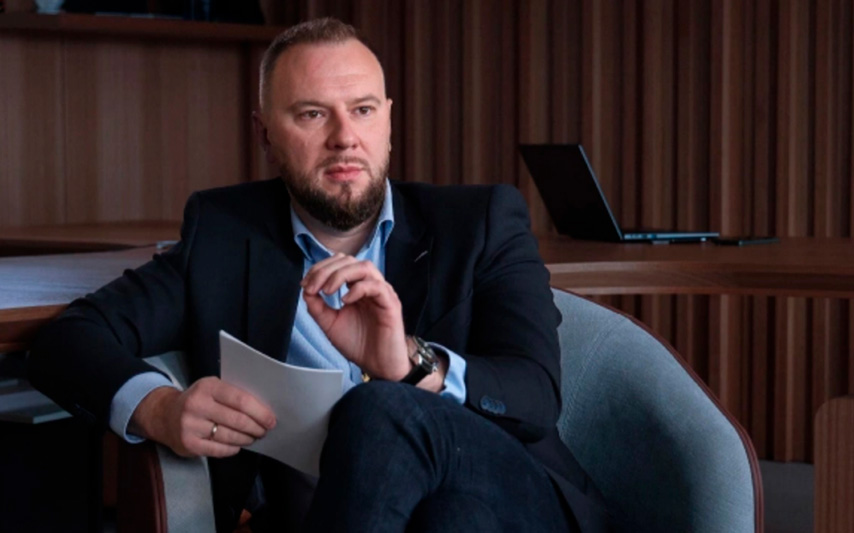
Oleg Fomenko (Photo: Andrey Lyubimov / RBC)
On demand
In 2025, the Russian market experienced the strongest drop in demand for electronics in 30 years. Before that, the consumer goods market could shrink in nominal rubles, dollars, or units, but never in rubles excluding inflation, says Oleg Fomenko, CEO of Merlion, one of the country’s largest distributors of electronics and home appliances and owner of Citilink. According to him, demand fell on average by 10–15%, something not seen in previous crises. The Russian market has moved to a model of gradual replacement of equipment; there will no longer be triggers for consumers to “run to stores and chaotically buy up electronics,” Fomenko believes.
“We remember 2008, 2014, even the pandemic years: there was a sharp surge of consumer activity. People converted their savings into electronics. Now they keep their savings in bank deposits. In addition, the industry had long been saying that sooner or later the market would reach saturation. It seems 2025 is that very year.”
ICMR (GfK-Rus) analysts report that, in money terms, laptop sales fell by 17.5% over eight months of 2025, smartphones by 18%, and TVs by almost 9%. In large home appliances, the drop is about 5–6% in the main categories and 4.5% overall for the category. The small home appliance segment is holding up best, showing positive dynamics in categories such as vacuum cleaners and kettles.
According to Fomenko’s forecasts, the fourth quarter is unlikely to correct the year-end figures; the decline will remain at 10–15%.
“The fat years of endless growth in the electronics market, when each next year exceeded the previous one, are gone. The market has changed following the consumer. I don’t think you should expect growth in electronics next year. But there are separate segments I believe in: gaming computers and gadgets, smart speakers, smartphone accessories. There are also no prerequisites yet for growth in the large home appliance market, but small home appliances, on the contrary, could take off. People have started taking more care of themselves and their health, spending more time at home, wanting calm and coziness.”
On Apple and Samsung
“The release of new smartphones has ceased to be a noticeable event. Now smartphones are mainly replaced when they break or get lost. And that makes sense. New models will most likely inherit the advantages and functions of previous generations; truly breakthrough technologies appear rarely. The drop in interest in smartphones is a global trend; sales are falling even in China, where government support programs operate. Basic needs—consuming content and games—are met by smartphones priced up to 20,000 rubles. Moreover, they are quite reliable and do not become obsolete so quickly: you can calmly keep using a smartphone bought two years ago. Plus there is price erosion of flagships, which after two or three years are sold for almost three times cheaper. At the same time, the hardware on board is still relevant.”
Although Apple and Samsung are still in the top in money terms in 2025, in unit sales the leading positions in Russia were taken by Chinese Redmi, Tecno, Huawei, and Realme, which are strongly pressuring the Korean and American manufacturers. According to the head of Merlion, there are several reasons for this: the official exit of brands from Russia and the slowing growth of device functionality.
Oleg Fomenko (Photo: Andrey Lyubimov / RBC)
“Chinese brands that have actively broken into many consumer electronics segments offer more innovative products for less money. There is no longer a condescending attitude toward Chinese manufacturers. They offer service, warranty, and often even more technological solutions than their well-known competitors, even in their standard models. This allows them to increase their market share. I myself am an active user of Chinese technology; I drive a Chinese electric car because it gives new sensations, emotions, and functionality. And our own private labels, some of which we manufacture in China, and the new brands that have now entered the market already have the full necessary set of functions, are technologically advanced, and give positive impressions from use.”
Consumers are interested in cheaper smartphone models. According to ICMR data, the share of the mid-price segment increased in 2025 by 3 percentage points compared to last year, while the expensive smartphone segment fell by more than 24 percentage points, including due to difficulties obtaining loans. Phones costing more than 100,000 rubles are becoming a completely niche product, Fomenko noted.
In his opinion, even if Apple, Samsung, and other brands that left the Russian market resume direct supplies, there will be no return to the 2021 situation.
“I have a hard time imagining what would have to happen from the consumer’s point of view for all of us to throw out our Chinese TVs, smartphones, Russian or Turkish home appliances. The consumer has adapted perfectly, sees competition. Average prices are falling, and they have plenty to choose from.”
According to MTS, Chinese brands lead in smartphone sales volumes and account for 81% of all unit sales and 52% in money terms. As of the first half of 2025, Apple smartphones rank first in Russia by sales in money terms, holding 28% of the market. They are followed by Samsung (19%), Xiaomi (15%), Tecno (7%), and Realme (6%). In unit terms, the American brand is in fifth place with an 8% share after Xiaomi (22%), Realme (14%), Tecno (13%), and Samsung (11%). In total, from January to June this year, 11.2 million smartphones were sold in Russia for a total of 275 billion rubles.
On attitudes toward brands
“We see that people have become more brand-independent; the share of new, not heavily promoted brands is growing in computer equipment and peripherals, as well as in electronics. This trend is confirmed by the growth of our private labels (our own brands; Merlion develops 11 private labels, including Digma, Starwind, and others—RBC). Their sales have doubled over the past three years; in 2024, growth was 25%. In 2021 private-label sales brought us 9% of sales (38.7 billion rubles), but in the third quarter of this year their share in the company’s turnover is already around 20%. The plan is to increase it to 25%.”
According to Fomenko, private labels are most popular in the small home appliance segment.
“Last year we acquired the Vitek and Rondell brands, which increased our sales in this category by 50%. This year we carried out rebranding and expanded product groups to ensure their further growth.”
On distribution
Distributors, as a rule, actively use borrowed funds to purchase goods—they are forced to prepay suppliers, and receive money only after sale. The Central Bank’s high key rate has led to an increase in the cost price of the distribution business. Exchange rate fluctuations, problems with international payments, and disruptions in logistics chains are added to this, which creates additional costs and causes supply interruptions.
In 2022, Merlion’s former head said that after official supplies of a number of major brands stopped in Russia, a “goods gap” had formed. According to Fomenko, there is now an excess of goods on the market in all sales channels. Moreover, the electronics and home appliance market has faced overstocking, and Merlion was no exception.
“Since August of last year the electronics market has started to fall. We noticed the trend and began to reduce purchases. But the fourth quarter of 2024, surprisingly, was not bad in electronics sales for the entire market. And we somewhat overstocked, taking into account November–December demand. The dollar exchange rate then was already 100 rubles, and all official forecasts spoke of its further growth. We guessed wrong— in fact, the rate, contrary to trends, began to decline.”
Oleg Fomenko explained that at the moment excess inventory has been sold off and the company’s stock is balanced. But against the background of supply exceeding demand, prices for electronics began to decrease.

Oleg Fomenko (Photo: Andrey Lyubimov / RBC)
Fomenko refused to comment on the topic of parallel imports, but explained that “it is easier and more profitable for large companies to build clear distribution chains.”
“It is difficult for us, and most importantly, we do not see big advantages for ourselves in it. There is traditional distribution, which is now built with a number of Chinese manufacturers: vendor, promotion channel, clear pricing policy. For the distributor, this approach has always been safer and more profitable. In addition, it provides additional funds for development in the form of vendor budgets [for promotion and marketing]. It should be said, however, that their volume has halved since 2021.”
No market players can pass increased costs on into the price of electronics anymore—otherwise the product will cease to be attractive to buyers. “Times are tough: purchasing power is not growing, demand is slowing, the cost of electronics is decreasing. We need to accept this and work on optimization,” Oleg Fomenko believes.
On Citilink
This year Merlion decided to change the holding’s business model. Previously, Citilink developed as a separate retail chain; but now, the retailer will use Merlion’s shared resources: warehouses, dark stores (a warehouse for picking online orders, from which they are delivered to a partner or customer, with a pickup option—RBC), transport resources, and others.
In 2023, Citilink began reducing staff and the number of retail outlets. Among the reasons cited were a nearly threefold drop in net profit over two years (from 2.2 billion to 800 million rubles), declining sales, and a reduction in the product assortment. Citilink representatives explained this by the “natural attrition” of sales points and staff turnover. At the same time, in 2024 revenue at Citilink grew by 13%, to 150 billion rubles, and net profit doubled, to 1.6 billion rubles, according to the company’s financial statements.
According to Fomenko, for many years Citilink had great autonomy from the parent company: separate management, a separate P&L (profit and loss—RBC), inventory, infrastructure, and strategy, but in recent years this became excessive, cumbersome, and expensive. Earlier, Citilink had a separate general manager; but now, de facto management has moved into the hands of Merlion’s CEO; logistics and warehouse management is concentrated in a single department, and sales channels are organized into three verticals formed around key audiences: b2c, b2b, and IT distribution partners. This should prevent situations where the distributor’s warehouse is packed while the retailer has free space, Fomenko explains.
Oleg Fomenko (Photo: Andrey Lyubimov / RBC)
“We have united the overall product space of the entire holding. Any b2c or b2b client can order either from Merlion or from Citilink and receive the product depending on their customer profile. We saw the trend—people do not come to Citilink to choose products in a store. That raises the question: do we need consultants? Probably not. Do we need specialists who process loans? Also not, because everything can be done on the website. That is, we are practically transforming the current retail staff. We had so-called universal salespeople who consulted, helped with the choice, and handed out the goods. This function is now practically dying out. A person chooses a product either through marketplaces or through a website, comes and picks it up. Therefore we have greatly reformatted both the management structure and the store staff. For example, we moved a sales floor employee to the warehouse, to goods pickup/issuance.”
Part of the retail outlets under the new strategy will be converted into dark stores; the company plans to open 27 locations of this format by the end of the year. These will be large hubs of 1.5 thousand square meters, whose main task will be the picking and issuing (handing over) goods for b2c and b2b clients.
In 2022, Citilink stated that it operated around 1,000 of its own retail outlets. Since 2023, the number of company-owned stores and pickup points has decreased by 30%. Now the company has more than 100 full-format stores and about 300 pickup points, the number of which is planned to increase to 500.
“The traditional model—come to a store, look, get a salesperson’s consultation, go home, think, come back and buy—doesn’t work. The product has become an absolute commodity (interchangeable, standardized—RBC). The decision is made while sitting in an armchair, via smartphone or computer. Delivery, pickup, and in 15 minutes the product is with you. It’s clear that 15 years ago it wasn’t like that.”
On marketplaces
Representatives of traditional retail have actively criticized marketplaces in recent years and demanded stricter regulation of their activities, as they face unequal competitive conditions. The main complaints are that online platforms set significantly lower prices, bear lower tax and operating costs, have advantages in the form of convenient delivery and a wide assortment, while physical stores incur significant expenses for rent, staff, and utilities. The largest physical retail players proposed limiting the size of discounts on marketplaces, setting a cap on the number of order pickup points, and introducing other restrictions.
“The rules of the game have changed very strongly in recent years. If we recall how the market was built, there were two chains that no longer exist—Euroset and Svyaznoy. They controlled more than half of the Russian phone market. Whichever manufacturers could reach agreements and get onto their shelves, offer the best price and the best terms, bought their market share. Now an entirely new entity has appeared in the form of marketplaces, and we see no sense in fighting it. The sales channel has become universally accessible. Merlion is now competing with any person who brought in a container of hair dryers with an unknown name and started selling them on a marketplace. And we go where the buyer is. Citilink is already seller No. 1 in the ‘laptops’ category on Ozon. This is a well-known brand that is trusted. Our customers know they will be able to return the product, get a warranty, and not run into counterfeit goods. For marketplaces, we act as a strategic partner, because the market needs quality products with a warranty, and we can provide that.”
Oleg Fomenko (Photo: Andrey Lyubimov / RBC)
In the structure of Merlion’s b2c sales, marketplaces now account for 35–40%, says Fomenko. Next year their turnover should equal the turnover of our own platforms (website, app, Citilink’s retail chain).
“There is a new consumption model. You can disagree with it, and there are many objective reasons for that, but the fact remains: you have to fish where the fish are. Our clients are now mostly on marketplaces, and therefore we also have to be there. In addition, we help our partners enter marketplaces as well. Since April 2025, the fulfillment operator Cactus has become fully part of Merlion. We can ensure a seamless supply of goods directly from Chinese manufacturers to Russian platforms—from customs clearance to filling out product cards. Marketplaces have changed consumer habits and already account for half of the online sales market in units. Although experts note that in 2025 their growth rates begin to slow, this does not eliminate the need to be there. And if people start making purchases directly from social networks tomorrow or a subscription model for purchases appears, we will adapt so that our clients can receive quality equipment with a warranty there as well.”
All news